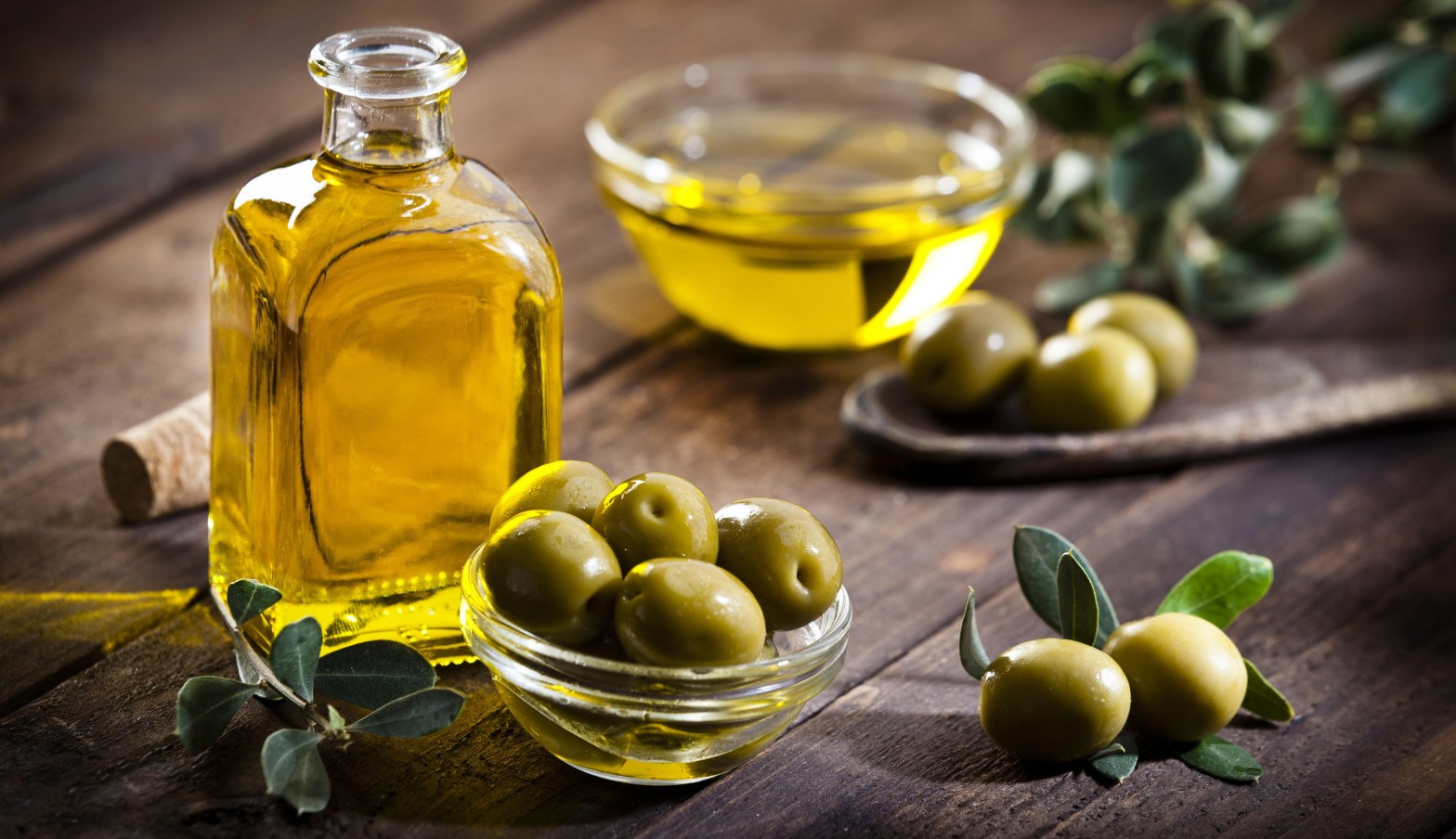
Olive oil is an essential part of the Mediterranean diet. The abundance of olive trees and the versatility of this oil are two reasons for the high popularity in Italy. The traditional olive oil process began by handpicking olives. This was because producing olive oil is a delicate process, and damaging the olives in anyways could alter the taste of the end result. Once picked, the olives were washed to remove any unwanted materials. Next, the olives were crushed into a paste with large granite stones, in order to release the oils. The paste was then mixed for a certain amount of time to allow for the oil droplets to combine. Finally, the olive paste was spread onto disks and pressed in a hydraulic press. This released both oil and water, which would later be separated.
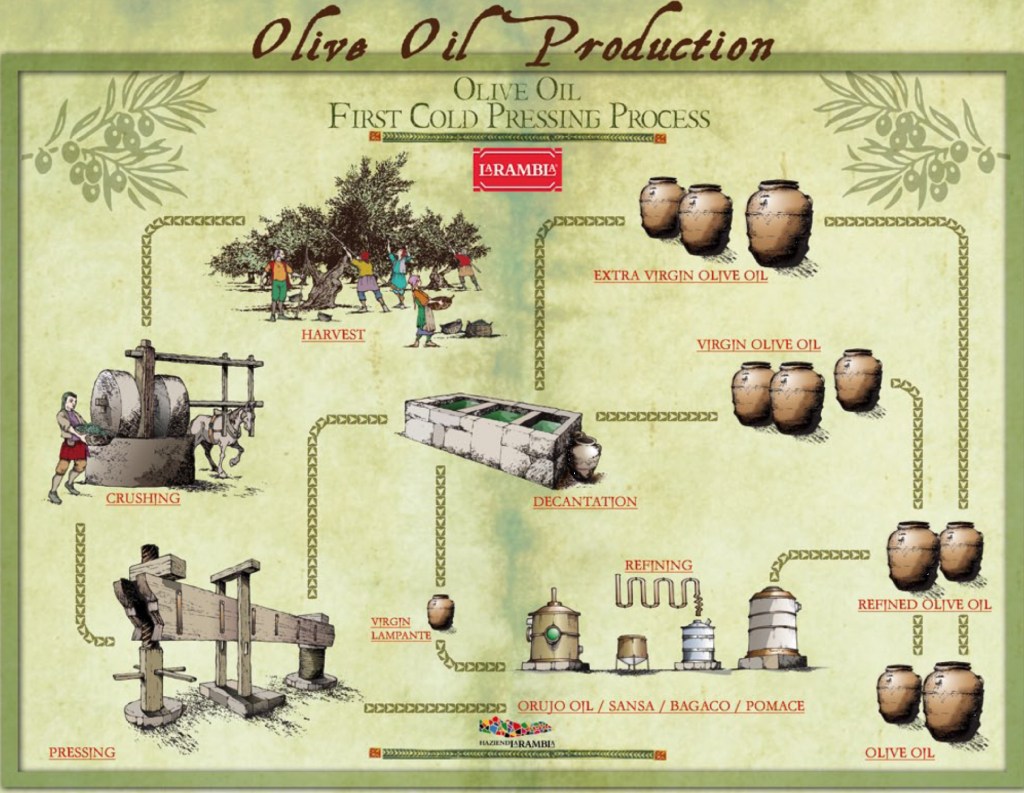
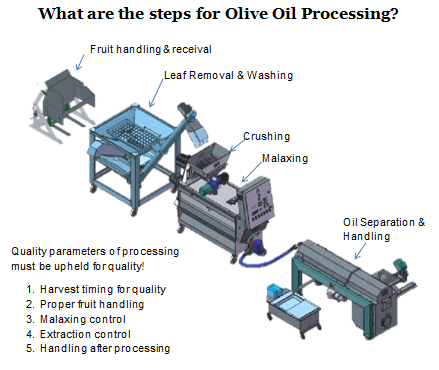
Modern olive oil processing is similar to the traditional process, except now there is the use of machines for some steps. Instead of handpicking, olive farmers use a “shaker” that sends vibrations throughout a tree which causes the olives to drop onto a net. This allows for a larger amount of olives to be picked at once. The granite stones that used to crush the olives were replaced with metal crushers that are able to work at fast speeds. Large vats that can control the speed and temperature of the olive paste are now used for the mixing process. The last step of modern olive oil processing is the most advanced because it relies solely on the use of a machine. The olive paste is no longer placed onto disks and pressed, but is added to an industrial decanter that uses centrifugation to separate the water and pulp from the olive oil. Check out this link: https://phys.org/news/2015-05-olive-oil.html, for more information about both of these olive oil processes!
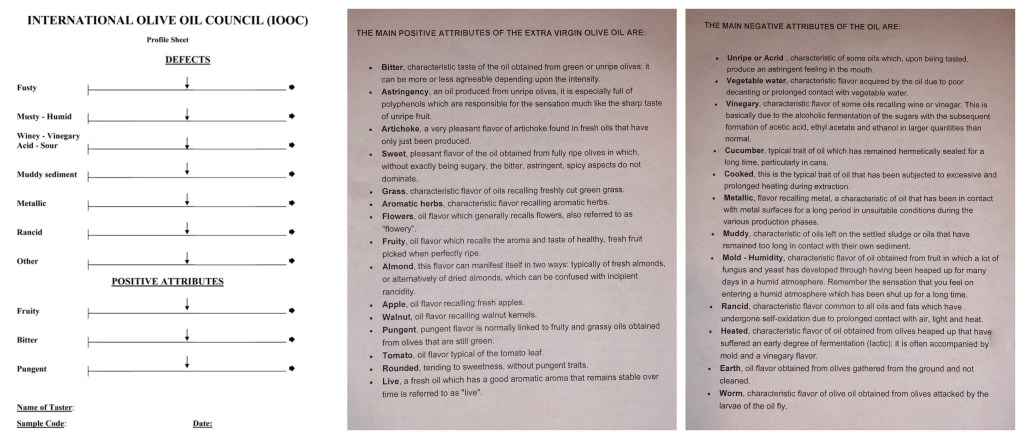
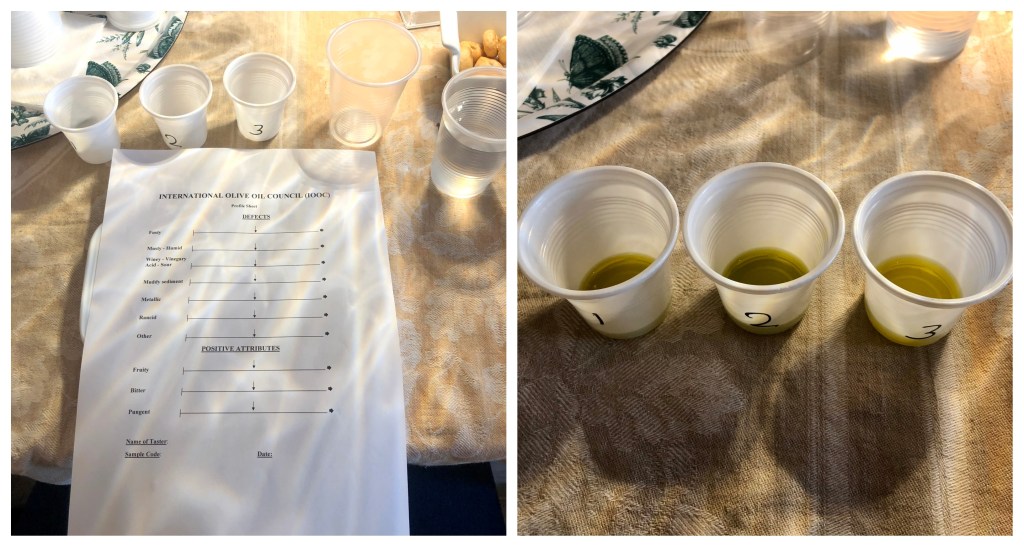
Olive oil tasting is actually very similar to wine tasting because of the large variety of flavors and aromas that each could possess. Before my classmates and I began the actual tasting, we were offered a firm green olive and a squishy/wrinkly black olive. Most people did not mind the taste, but in my opinion they were terrible. Also, we were all given a couple sheets of paper that would eventually help us assess each oil. The first sheet we were given had a list of the main positive attributes and the main negative attributes (defects). The second was a profile sheet that is used by the International Olive Oil Council (IOOC) to assess the quality of an oil. This profile sheet lists several defects and a few positive attributes, with a scale next to each. If a taster perceives a defect or positive attribute, they mark the intensity along the corresponding scale.
For this tasting, my classmates and I sampled and assessed three different olive oils of three different qualities. Two of the oils were of good quality, one of which was slightly better, and the last oil was considered to be of poor quality. We were given three small cups labeled one through three, as well as a water cup and an empty cup to spit the oil in. A sample of each oil was poured into one of the three small cups; the identity of each oil was unknown to my classmates and I.
Alright, now it’s time to discuss the fun part! The first step in olive oil tasting is to slightly warm up the oil. My classmates and I started with the small cup labeled “1”. We all placed this cup into the palm of one hand, and used our other hand to cover the top. Then, we twisted the cup between our hands to warm the oil which released certain aromas that we might have missed before. As you all probably could have guessed, the next step was to smell the oil. After, everyone tried to guess what exactly they were smelling. There were a lot of wrong answers, including mine (I thought I was smelling garlic), but I believe a couple of my classmates guessed correctly. The main aroma of olive oil #1 was grass. Next, it was finally time to taste the olive oil. My classmates and I took a small sip, swished it around our mouths, then inhaled sharply. When performing an olive oil tasting, drawing in air with each sip helps to heighten the flavor. We were all warned to not swallow the olive oil because it can be very gross to “drink oil”. It is common with olive oil tastings to spit out the oil when you are done. After everyone spit out the oil, it was time to assess what exactly everyone tasted. We worked our way through the profile sheet, and discussed if we tasted any defects and/or positive attributes. Before we were able to move on to the other tastings, we had to eat a slice of apple to cleanse our pallet. The next two olive oil tastings followed the same procedure as the first one.
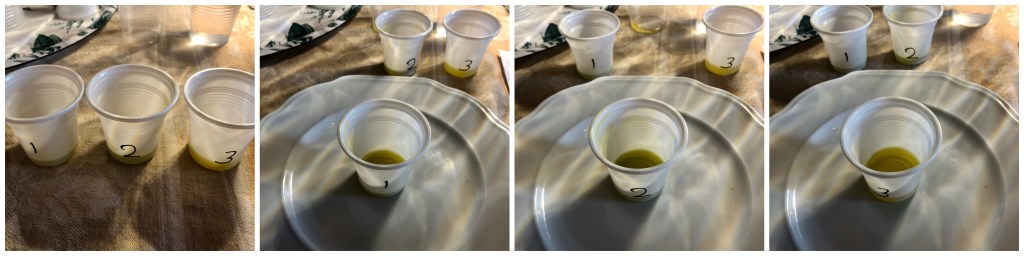
It was determined that olive oil #1 did not have any defects, and the positive attributes were grass (mentioned before when we first smelled it) and tomato. Olive oil #2 also did not have any defects, and the positive attributes were sweet and almond. Finally, olive oil #3 did not have any defects, but it also did not have any overwhelming positive attributes.
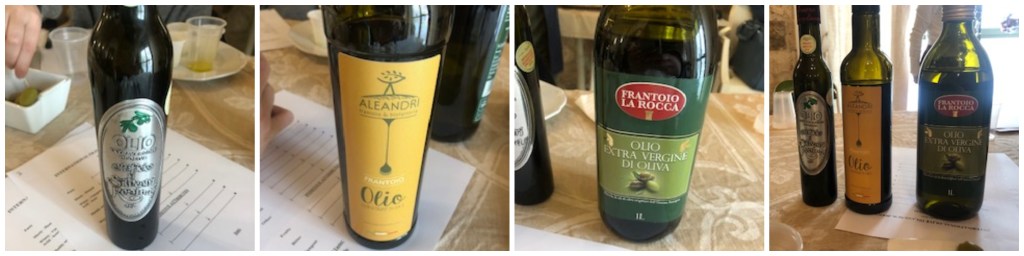
After all three olive oils were assessed, it was time to reveal their identities. The first olive oil can be found in a fourth liter bottle for nine euros. The second olive oil can be found in a half liter bottle for ten euros. The third olive oil can be found in a one liter bottle, at any grocery store, probably for three to four euros. With all that being said, the first two olive oils were of good quality, the first one was of slightly better quality, and the third oil was considered of poor quality.
As most of you all probably know by now, my study abroad experience was cut short due to the spreading of coronavirus. This blog post is the last one about a field trip or experience that I went on or had in Italy. I am continuing the classes I started as online classes, including the one this blog is for. So, from now on my posts will be written based on what I am asked to research each week. I promise to try and keep it entertaining! My next blog post will be about pasta, more specifically “preparing fresh pasta at home”. Instead of just boring you all with a bunch of research, I plan on making my own pasta, and teaching you all how to do it too! I hope you’ll enjoy it! 🙂
 Anna's Italian Food Adventures