
Italy is recognized to have some of the oldest wine producing regions in the world. There are over 500 different varieties of Italian wine produced throughout the entire country, making Italy the world’s largest producer of wine. Some types of Italian wine are only produced in one region, but most can be found in multiple different regions.
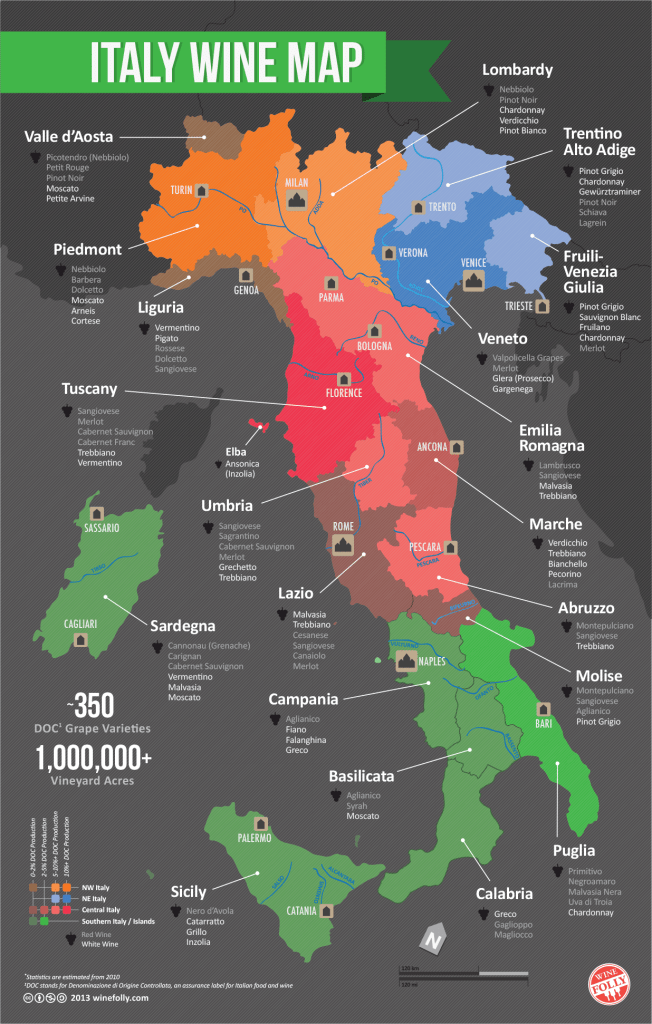
Moscato is a popular type of Italian wine that is made from the Moscato grape variety. These grapes flourish in the Mediterranean climate, and can be found in several Italian regions. Each region produces a different style of Moscato with unique characteristics. Moscato grapes can also be several different colors, but are more commonly seen as “blanc”, or white. The northeast region Trentino Alto-Adrige is known for Moscato Rosa, a red colored wine with a spice and berry flavor, and Moscato Giallo, a golden colored dry wine with floral and spicy flavors. Pantelleria, a small island near Sicily is known for Moscato di Pantelleria, which is an amber colored wine with apricot flavor. The last two styles of Moscato are produced in the northwest region, Piedmont. Moscato d’Asti is a frizzante (slightly sparkling), golden colored sweet wine. The second style is Asti, a “fully sparkling”, less sweet version of Moscato d’Asti. Moscato d’Asti is the most popular and most recognizable style of Moscato. At most establishments, Moscato d’Asti is generally served to a customer if they ask for Moscato.
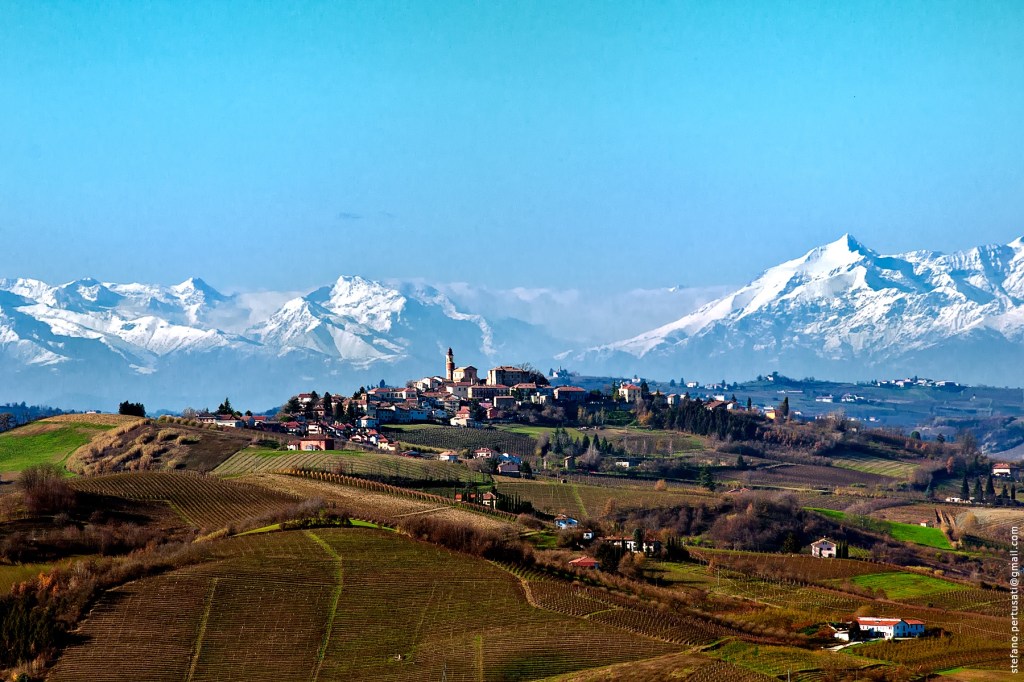
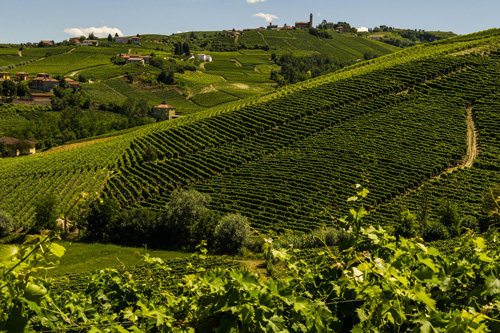
Mountainous terrain and valleys take up most of the land in Piedmont, leaving only 30% of the region available for vineyards. The warm Mediterranean climate and the colder weather from the Alps causes temperature variation, filling the entire region with a thick fog. Vineyards are planted along the hillsides because this fog takes all day to clear, which could limit the amount of sunlight hitting the ground. The Moscato grapes are often grown in the cooler vineyards.
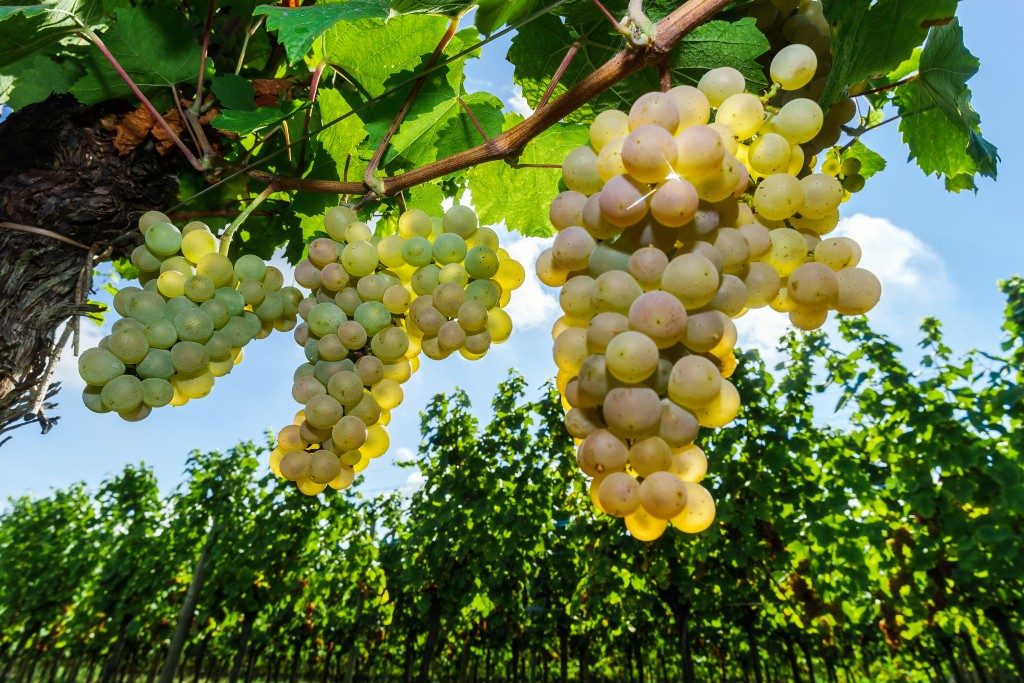
Moscato grapes are one of the oldest grape varieties grown in Piedmont. But, Moscato d’Asti is a relatively new wine for the general public. Originally, winemakers would make this slightly fizzy wine for themselves to enjoy. It even gained the reputation of being a “winemaker’s wine”. They would often drink Moscato d’Asti during lunch because the low alcohol content did not impair their ability to do their jobs. Eventually, it became popular throughout Piedmont to consume this wine during long, multi course meals to cleanse their palate before each course, and also prepare their palette for dessert.
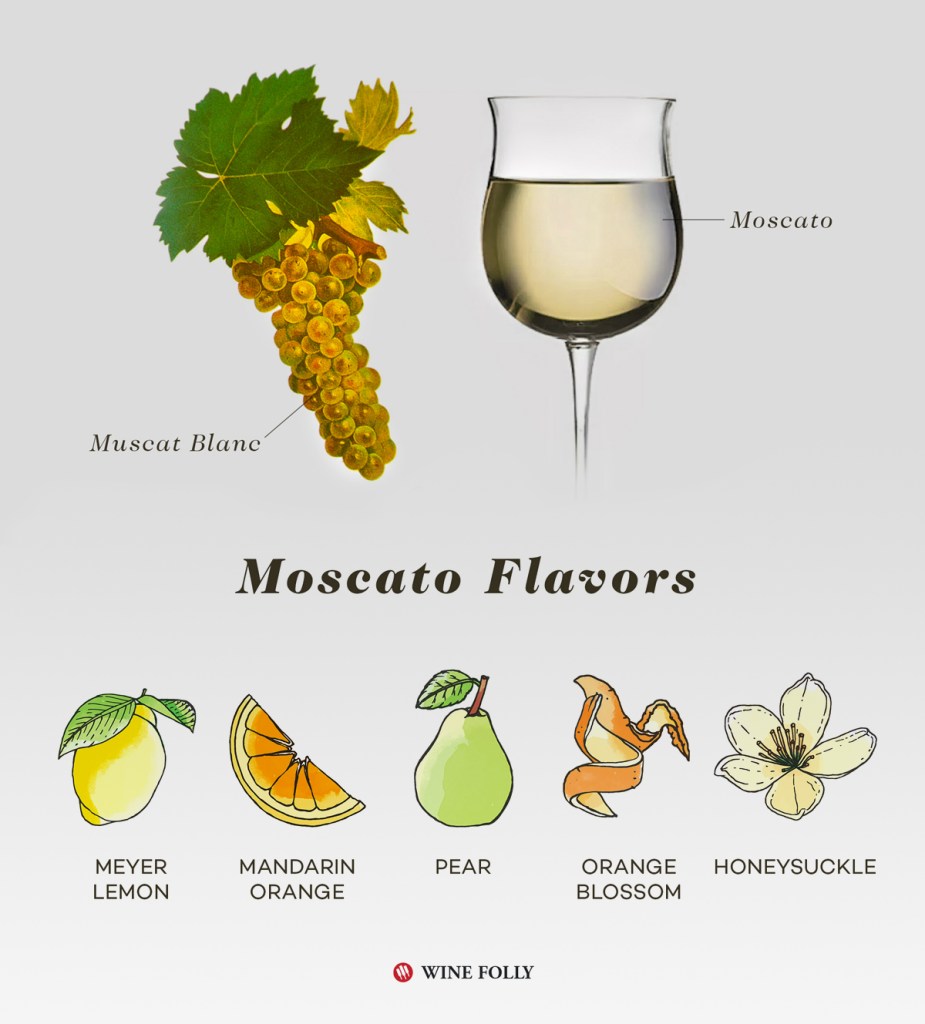
All styles of Moscato are known for being sweet, and easy to drink. The high sugar content and low amount of acid in Moscato grapes are responsible for the candy-like flavor. When smelling this type of wine, the floral and fruity notes are very prominent. Each individual note can be distinguished through a sip of wine. The common fruity flavors of Moscato are peach, apricot, orange and lemon, with floral scents of rose petal, elderflower, and honeysuckle.
Moscato d’Asti is the type of wine everyone pictures when they hear the word “Moscato”. It can sometimes be difficult to pair this wine with main courses because of the level of sweetness. But, when served with appetizers, sweet brunch dishes, dessert, or even alone, it is perfect. The key to pairing wine with food, is to choose opposing flavor profiles. For example, Moscato d’Asti would pair perfectly with anything hot and spicy, such as Indian curries, or buffalo chicken wings. Also, a high alcohol content has been known to increase the level of spiciness. So, the low, 5% alcohol content in Moscato d’Asti could help calm burning sensations when compared to 12% alcohol content commonly found in other wines. Cured meats like prosciutto, and salami have a high salt content, and can be paired with the wine to balance sweetness. Brie and Camembert, two soft, creamy cheeses can be paired with Moscato d’Asti without overwhelming the fruit profiles. A plate of crunchy raw carrots, celery, cucumbers, and radishes complements the light bubbles in the wine. Any kind of fruit dessert, and pancakes or waffles topped with fruit and whipped cream would accompany the fruit flavors in Moscato d’Asti excellently.



There are a ton of different wineries that produce Moscato wine within the region of Piedmont. But, one winery in particular focuses on Moscato, by dedicating most of their vineyards to growing Moscato grapes. Saracco is located in Castiglione Tinella, known as the “heart of the Moscato d’Asti”, within the Province of Cuneo. This winery has been producing Moscato wines since the early 1900s. Saracco only produces five different types of wine, and the most popular are the two Moscato wines. When it comes to growing grapes, the soil is very important to Saracco. Their land is made up of sand, silt, and limestone, which they believe to be ideal for enhancing the aroma of Moscato d’Asti. For more information about Saracco, please visit their website: http://paolosaracco.it/en/!
 Anna's Italian Food Adventures